Fast turnaround gets all the attention. But for a high-volume clinic, fast isn’t the point. Predictable is.
A lab that’s quick some weeks and late others is harder to work with than one that’s steady every week. You can plan around a known timeline. You can’t plan around a maybe.
What unpredictable turnaround really costs
When you can’t trust the return date, your whole schedule starts to bend around the lab:
- Fit appointments get booked with extra buffer “just in case”, pushing patients further out.
- Late cases mean rescheduled patients and empty chairs.
- Your front desk spends hours chasing the lab instead of filling the book.
- Clinicians hold off booking until the work is physically in the building.
Each of these is small. Together, they turn a full appointment book into a fragile one. As we covered in our last post on the real cost of remakes, every chair hour lost is revenue you don’t get back.
Predictable beats fast
Speed only helps if it’s consistent. A 48-hour turnaround that’s hit every time is worth more than a 24-hour promise that slips once a fortnight.
Predictability lets you:
- Book the fit appointment when you send the case, not when it arrives
- Give patients a date and keep it
- Run tighter schedules with less buffer
- Stop chasing and start planning
Five ways to build a schedule your lab can’t break
- Know your lab’s real timelines. Not the best case, the standard. At ADL, digital splints are 48 hours in-lab from scan. Local delivery is typically three days, interstate four to five. Custom sleep appliances take 10 business days. Build your booking rules around those numbers.
- Send digital wherever you can. Scans arrive instantly, skip the courier leg on the way in, and give the lab a cleaner starting point. We accept iTero, 3Shape TRIOS, Carestream and Medit files.
- Scan ahead of the appointment that matters. For planned work, like retainers at de-band, scan one to two weeks early. The appliance is waiting in your clinic before the patient sits down.
- Get the prescription right upfront. Most delays start with a question. A complete script and clear notes mean production starts straight away, not after a round of back-and-forth.
- Work with a lab that tells you early. If there’s an issue with a case, you should hear about it well before the due date, not on it. A phone call on day one protects your schedule. A surprise on day three breaks it.
How Australian Dental Lab keeps turnaround predictable
Predictable turnaround isn’t luck. It comes from how a lab is built.
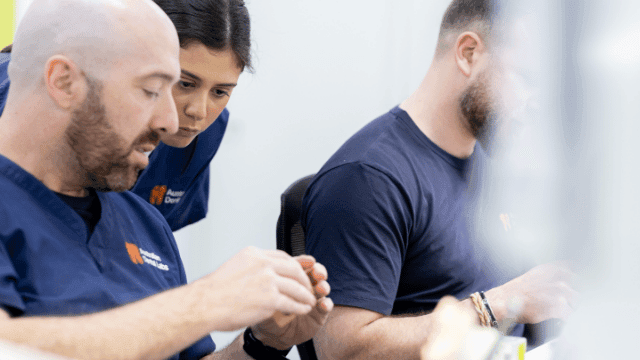
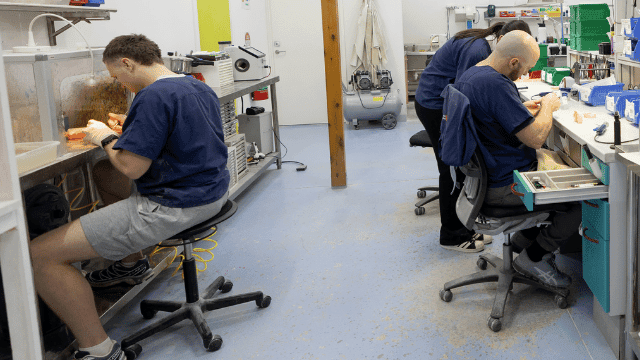
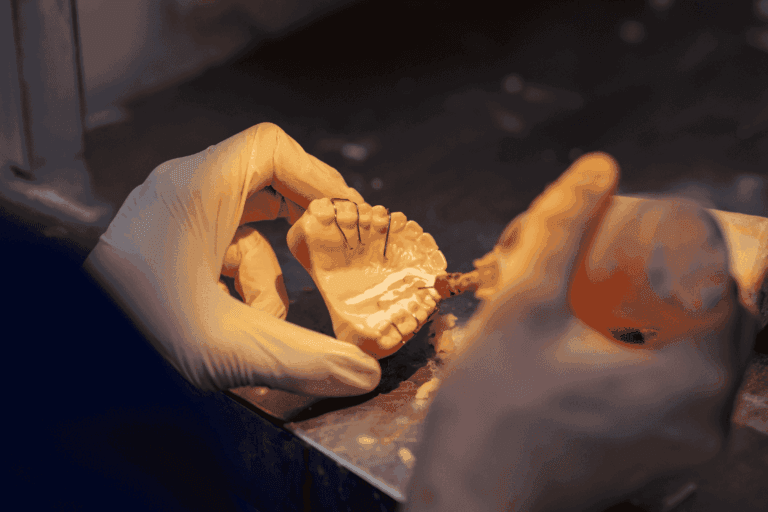
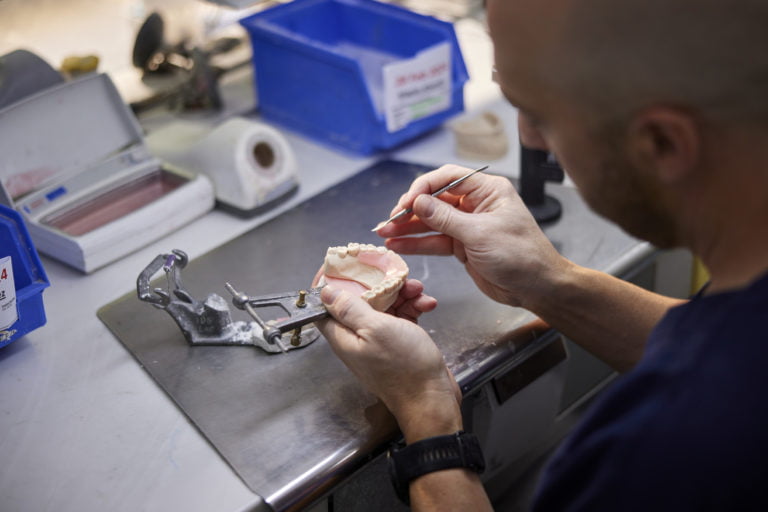
Everything is made in-house, in Australia. No offshore production, no third-party hand-offs, no customs delays. We control every stage of the timeline.
Capacity is planned, not stretched. We partner with a limited number of high-volume clinics, so your cases aren’t stuck behind an overflowing queue.
You deal with people, not a ticketing system. Direct contact with the lab team means same-day answers, not a callback next week.
Built for clinics that run full books
If you’re sending 20 to 40+ cases a month, turnaround isn’t an admin detail. It’s what your whole schedule sits on.
We work with clinics that need their lab to be as reliable as their own team. If that’s you, the easiest way to see the difference is to send us your next case.
Book with confidence
Predictable turnaround. Fewer surprises. More time treating patients, less time chasing cases.