Most clinics count the cost of a remake the same way: one case, made twice. The lab fee gets absorbed, the materials get written off, and on paper it looks like a minor inconvenience.
It isn’t. For a high-volume clinic, the lab bill is the smallest part of a remake. The real cost sits in your appointment book.
A remake is a chain reaction
One remake sets off a string of costs that never appear on an invoice:
- The fit appointment is lost. The patient is in the chair, the restoration doesn’t seat, and that slot produces nothing.
- The patient is rebooked. Another appointment, taking a slot that could have gone to new treatment.
- Your team absorbs the admin. Photos, notes, calls to the lab, re-scans, chasing a new due date.
- The patient loses confidence. They took time off work to be there. Now they have to come back.
- Your schedule loses predictability. One delayed case pushes the next, and the one after that.
None of that shows up on the lab invoice. All of it shows up in your revenue.
Do the chair-time maths
Every chair in your clinic has an hourly value: what it produces when it’s treating patients. For this example, say it’s $500 an hour. Use your own figure.
A single remake typically burns 30 to 60 minutes of chair time across the failed fit, the re-scan and the second fit appointment. That’s before your team’s time.
Now scale it. A clinic sending 30 cases a month with a 5% remake rate faces around 18 remakes a year. At 10%, it’s 36. At 45 minutes each, that’s 13 to 27 hours of chair time spent fixing work instead of doing new work: roughly $6,700 to $13,500 a year, from one chair’s worth of cases.
That’s the number worth knowing. Not “what did the remake cost the lab?” but “what did it cost my chair?”
Why remakes happen
Remakes rarely come down to one bad day. They come from friction in the process:
- Scans or impressions that aren’t checked before production starts
- Unclear prescriptions that nobody queries
- Slow or patchy communication between clinic and lab
- Inconsistent results from one case to the next
- Rushed turnaround that forces shortcuts
Most of these are system problems, not clinical ones. That means they can be fixed at the system level.
What right first time actually looks like
At Australian Dental Labs, right first time isn’t a slogan. It’s how the lab is set up.
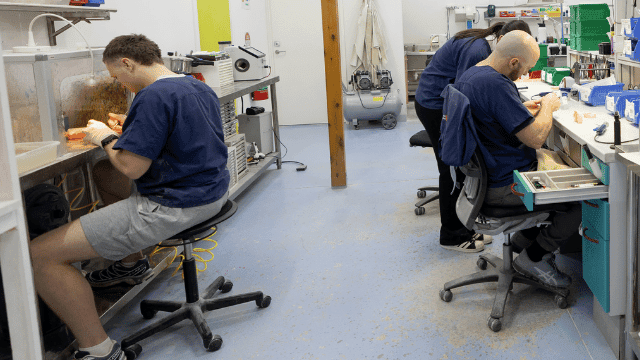
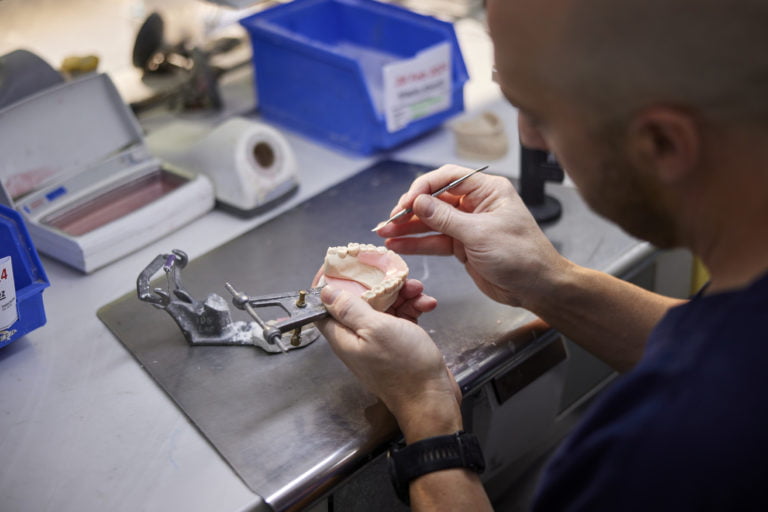
Everything is made in-house, in Australia. No outsourcing and no offshore hand-offs. Full quality control from scan to dispatch.
Problems get caught before production, not in the chair. If something in a scan or script doesn’t look right, we pick up the phone first.
You talk to people who know your case. Direct contact with the lab team, not a call centre.
Turnaround you can plan around. Digital splints are 48 hours in-lab from scan, and local delivery is typically three days. Book fit appointments with confidence.
Digital files, clean inputs. We accept iTero, 3Shape TRIOS, Carestream and Medit scans, so cases arrive consistent and ready to build.
Built for clinics where chair time matters most
We partner with a limited number of high-volume clinics: practices sending 20 to 40+ cases a month, where every chair hour counts and a remake is a real hit to the day.
If your clinic sends the occasional case, we’re probably not the right fit. If you’re running full books and want lab work you don’t have to think twice about, that’s exactly who we’re built for.
Stop paying for the same case twice
Fewer remakes. Predictable turnaround. More time in the chair doing what you do best.
Send a case. See the difference.